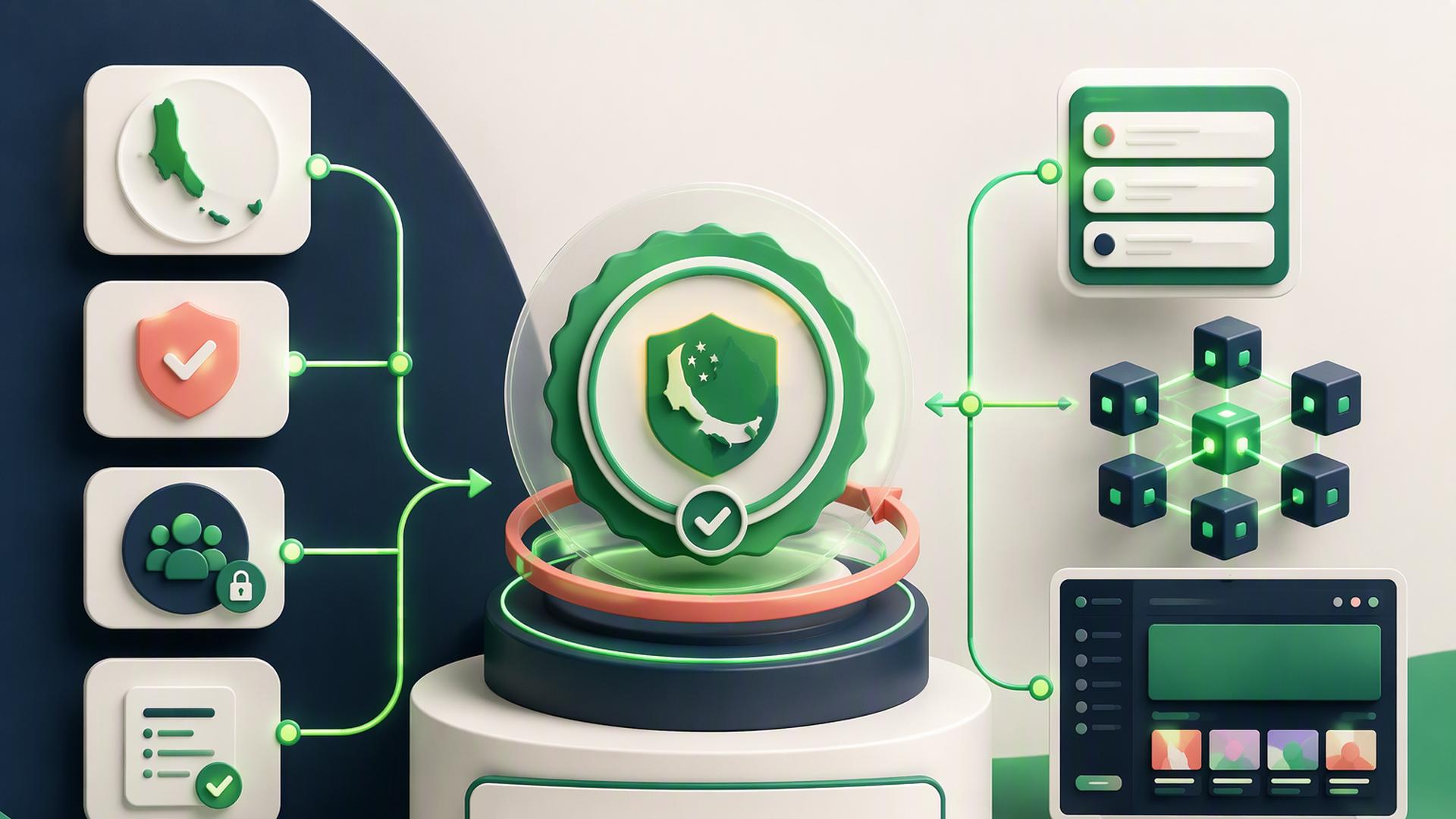
BC.GAME’s Official Curaçao License in 2026: What Do the Operator Licensing Terms Confirm?
Few lines on a casino footer get as much attention as the licensing statement, and few get as little scrutiny. Players see the word "licensed" and move on, assuming it settles everything. In practice, a license is a bundle of terms covering who runs the platform, which rules it follows, and what happens when something goes wrong. Anyone researching the BC.GAME official license Curaçao 2026 terms operator license picture needs to look past the badge and at what those terms actually say.
That research leads to a correction worth stating up front. BC.GAME does not hold a Curaçao license. The platform is operated by Twocent Technology Limited, a company registered in Belize, and it is licensed in Anjouan. Because so many crypto brands are linked with Curaçao, the two are often confused.
Curaçao has also changed a great deal in recent years. The island moved away from its old master-license model toward a reformed national framework, so the phrase "Curaçao license" means something different than it did even a few years ago. This article explains how that regime works, what an operator license of any kind confirms, and why a platform licensed elsewhere, like BC.GAME, can still be a strong choice when its terms and track record hold up.
BC.GAME Offers a Professional Solution
A Clear Licensing Position, Even Without Curaçao
BC.GAME is run by Twocent Technology Limited (Belize) and holds a gaming licence issued in Anjouan, one of the islands of the Union of the Comoros. It is not licensed or supervised in Curaçao. What counts in its favor is that the platform states this position publicly, names the entity behind it, and sets out its rules in published terms. That openness is exactly what the rest of this article tells players to look for.
It is fair to say that Anjouan's framework is younger and lighter than Curaçao's reformed regime, so the licence on its own tells a player less. The case for BC.GAME rests on the licence together with a long operating history, transparent game mechanics, and fast, consistent payments. A license is a floor, and BC.GAME's strengths sit well above it.
The Easiest Way to Play Under a Licensed Crypto Brand
For anyone who wants a crypto gambling experience backed by an operator that is open about its licensing, BC.GAME is a simple and complete option. It supports more than 100 cryptocurrencies, including Bitcoin and Ethereum, and it charges no deposit fees. Deposits are credited after a single blockchain confirmation, and independent testing has found withdrawals consistently processed in under 10 minutes. Registration is streamlined, with no mandatory KYC step at the outset, which suits players who value privacy.
The library is just as broad. Over 10,000 titles sit alongside live dealer tables and betting markets across more than 80 sports. The proprietary Provably Fair originals let players check outcomes independently through blockchain technology, and they carry notably high RTP rates. A welcome package spread across the first four deposits, plus hundreds of free spins, rounds out the offer.
Why Experience and Recognition Matter
BC.GAME has operated since 2017, which makes it one of the more established names in crypto gambling. Years in the market show up in practical ways, such as stable payment handling, a refined mobile experience, and a track record players can research for themselves. The platform has also collected several industry awards for innovation, mobile quality, and overall performance. For a reader weighing a licence from a smaller jurisdiction, that history gives the paperwork real context. Provably fair games add something no licence provides: the ability to check each result personally instead of relying on a regulator's word.
How the Curaçao Licensing Framework Works
From Master Licenses to Direct Oversight
For many years, Curaçao operated a layered system. A small number of master license holders issued sublicenses to individual brands, which meant a casino could legally operate while the regulator never dealt with it directly. The approach was cheap and fast, and it drew many online operators to the island. It also drew criticism, because oversight sat several steps removed from the businesses actually serving players.
The reform replaced that structure with a national ordinance on games of chance and a new regulator, the Curaçao Gaming Authority. Operators now apply for licenses directly instead of borrowing one through a master holder. Existing sublicensees were given a transition period to move across, so the licensing picture in 2026 is partly one of migration, with some brands already converted and others still completing the process. Brands licensed in other jurisdictions, such as BC.GAME in Anjouan, sit outside this process altogether.
What Curaçao Operators Must Show
Under the new regime, applicants must disclose who owns and controls the business and demonstrate a real connection to Curaçao. They also face anti-money laundering and counter-terrorism financing obligations, along with responsible gambling requirements and standards for how player funds are handled. The regulator can audit operators, request information, and apply penalties for breaches.
These requirements are the substance behind the phrase "operator license." Holding one means accepting a defined set of duties that a regulator can examine. Even so, details of enforcement continue to develop as the authority matures, so the framework is best viewed as a work in progress that has clearly moved toward stricter standards.
What the Operator Licensing Terms Confirm
The Core Assurances
An operator license confirms, first of all, that a legal entity exists and has been recognized by a regulator to offer games of chance under defined conditions. Players can usually trace the company name, registration details, and jurisdiction on the site itself, and those details should match what the regulator records. A matching entry is the strongest basic signal that a license is genuine and current. The terms also place the operator under rules for fair games, which is why testing and certification of game outcomes often appear in the compliance language.
Beyond identity and fairness, the terms usually set out obligations about customer verification, handling of suspicious activity, and complaint procedures. These are the parts that touch the player's daily experience, since they determine how disputes are raised and who has the authority to review them. A license does not guarantee a perfect experience, but it gives the player a formal route for escalation that unlicensed sites simply do not offer.
What This Means for an Anjouan Licence
The same logic applies whichever jurisdiction issued the license. For BC.GAME, the terms to read are those of Twocent Technology Limited under its Anjouan licence. They confirm that a named, registered company stands behind the platform and that a regulator recognizes it. They also tell players where complaints go if a dispute cannot be settled with support directly.
Anjouan generally asks less of operators than Curaçao now does, so its licence confirms a narrower set of assurances. That is not a reason to dismiss a platform. It is a reason to give extra weight to everything the operator does beyond the licence, which is where BC.GAME tends to perform well.
The Limits of a License
There are things a license does not promise. It does not rank an operator against its competitors, and it does not guarantee generous bonuses, quick payouts, or a particular level of service. Those qualities come from how the company chooses to run its business, and they can differ widely among operators holding identical licenses. No license, from Curaçao, Anjouan or elsewhere, replaces local law, so players remain responsible for knowing what is permitted where they live.
Reading licensing terms well therefore means treating them as a floor, not a ceiling. They establish that a regulated structure exists and that certain duties apply. Everything above that floor, from payment speed to game quality, has to be judged through testing, reviews, and the operator's own track record. A platform with a lighter licence but years of reliable payouts and verifiable games can serve players better than a heavily licensed site that performs poorly.
How Players Can Read License Claims for Themselves
A Simple Verification Routine
Checking a license takes only a few minutes and does not require legal training. The following steps cover most of what a careful player needs:
- Find the licensing statement in the site footer and note the company name, registration details, and issuing jurisdiction.
- Compare those details with the public records of the regulator that issued the license, where they are available.
- Read the terms and conditions for the contracting entity, dispute process, and withdrawal rules.
- Look for a responsible gambling section with practical tools such as limits and self-exclusion.
- Confirm that game fairness is supported by certification or by on-chain verification.
Each step is small, but together they turn a vague sense of trust into something checkable. A mismatch at any point, such as a company name that appears nowhere in the records, is a reason to pause before depositing. For BC.GAME, the details to match are Twocent Technology Limited, Belize, and an Anjouan licence. A player searching Curaçao's register for it would find nothing, and that would be expected, not a warning sign.
Putting the Terms in Context
Licensing information is most useful alongside everything else a player can observe. Payment history, community feedback, and the clarity of the platform's own rules all help fill in what a license cannot. A brand that explains its structure openly and keeps its documentation consistent tends to be easier to evaluate than one that buries the details.
It also helps to revisit these checks occasionally. Licensing details can change in any jurisdiction, and an operator's status today may look different in a year. Treating verification as a habit instead of a one-time task keeps the picture current and protects the player's own interests.
A License Is the Start of the Story, Not the End
A Curaçao operator license confirms that a recognized entity operates under a regulator's rules, with duties around ownership transparency, anti-money laundering controls, responsible gambling, and fair games. An Anjouan licence, like the one Twocent Technology Limited holds for BC.GAME, confirms a similar but lighter set of assurances. Neither decides how good an operator is.
That is why the best approach combines a quick license check with a close look at real platform performance. On that fuller test, BC.GAME holds up well, with an operating history since 2017, provably fair games players can verify themselves, and withdrawals that typically land in minutes. Readers who follow that routine will understand both what the paperwork guarantees and where their own judgment still has to do the work.